题目 有一个盘子,可以放5个水果(苹果or桔子)。父亲每次向盘子随机放入一个水果(苹果or桔子),父亲放入水果的次数不少于11次。儿子只吃桔子,女儿只吃苹果。请编程使用信号量机制模拟解决此进程同步问题。打印信息包括盘子的情况、调度的情况以及父亲、儿子或者女儿执行的操作。
思考 这是由经典生产消费者问题引申出的一道题,我使用的是Java并发的Semaphore来实现的。其中我使用到了如下几个信号量:
1
2
3
4
Semaphore mutex = new Semaphore (1 ); Semaphore empty = new Semaphore (5 ); Semaphore orange = new Semaphore (0 ); Semaphore apple = new Semaphore (0 );
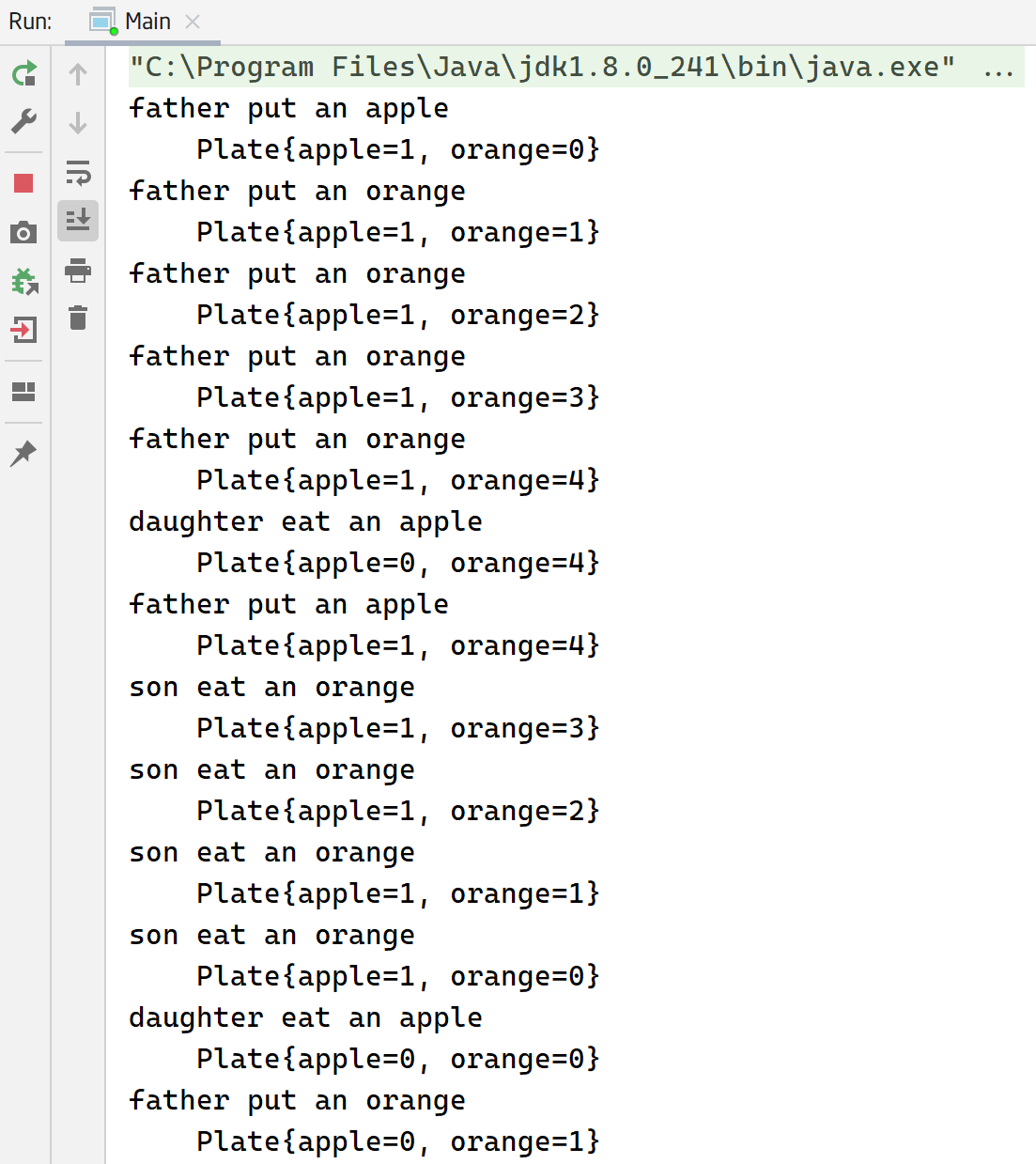
实验结果也是正确的:
但是我也产生了以下疑问:盘子互斥量(mutex)是否是必须 的?
Talk is cheap, show me the code
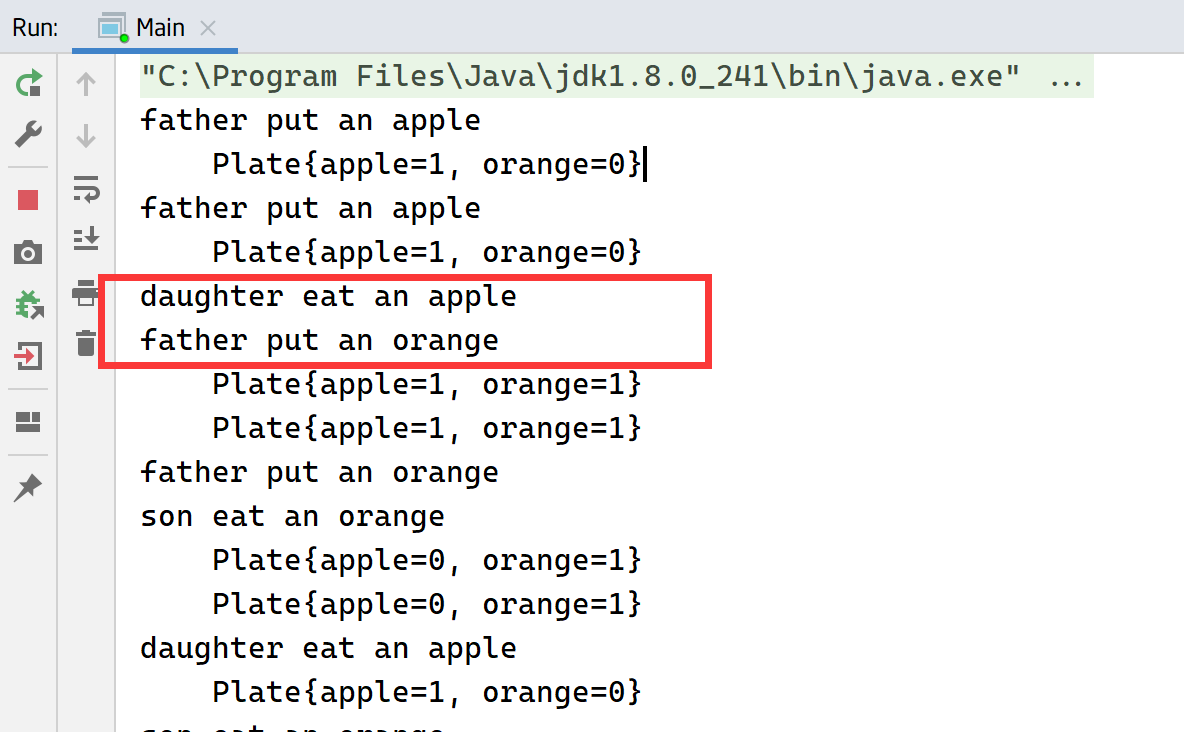
当我去除了mutex信号量后问题很快就出现了:
可以看到我们的输出竟然乱序了!这个现象很有意思,先看我们父亲的源代码:
1
2
3
4
5
6
7
8
9
10
11
12
13
14
empty.acquire(); if (random.nextBoolean()) { plate.putApple(); System.out.println("father put an apple" ); System.out.println("\t" + plate); apple.release(); } else { plate.putOrange(); System.out.println("father put an orange" ); System.out.println("\t" + plate); orange.release(); }
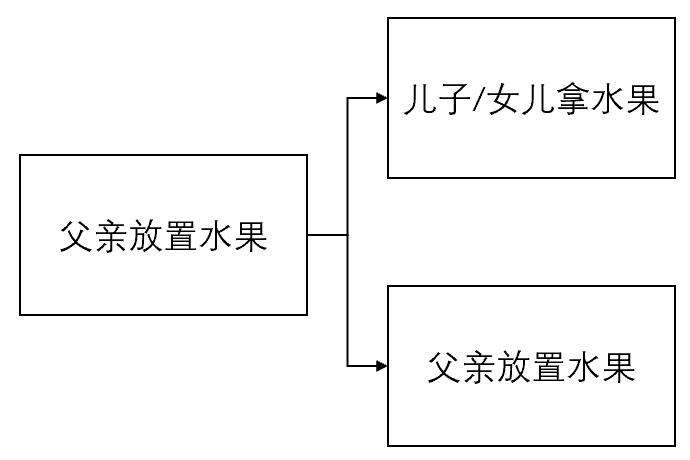
初看可能会感到疑惑,V(apple/orange) <=> apple/orange.release()的操作明明是在println之后做的,为什么还会出现输出不规则的情况?事实上输出是没问题的,原因在于当父亲前一次 放置了水果后触发同步信号,引起女儿/儿子的eat行为,结果在父亲后一次 放置水果时发生了和女儿/儿子eat行为的并行情况!可以参考如下图所示:
现在输出问题已经明了了,我们着眼于并发安全性,这样会导致程序执行的结果出错吗?我们还是先用实验来说明问题,在前面的实验中,我们限制了父亲放置水果的总量为12:
1
2
3
4
5
6
7
8
9
10
11
12
13
public class People { private Runnable thing; private int times; public void start () { new Thread (() -> { int times = this .times; while (times == -1 || times-- > 0 ) { thing.run(); } }).start(); } }
我们将times设置为-1,这将时程序无限执行下去,同时我们也加入了错误检查代码,一旦执行出错,结束程序:
1
2
3
4
5
6
7
8
9
private void checkCapacity () { if (apple + orange > capacity) { System.err.println("error: the num of fruits is greater than capacity!" ); System.exit(-1 ); } else if (apple < 0 || orange < 0 ) { System.err.println("error: the num of fruits should not be minus!" ); System.exit(-2 ); } }
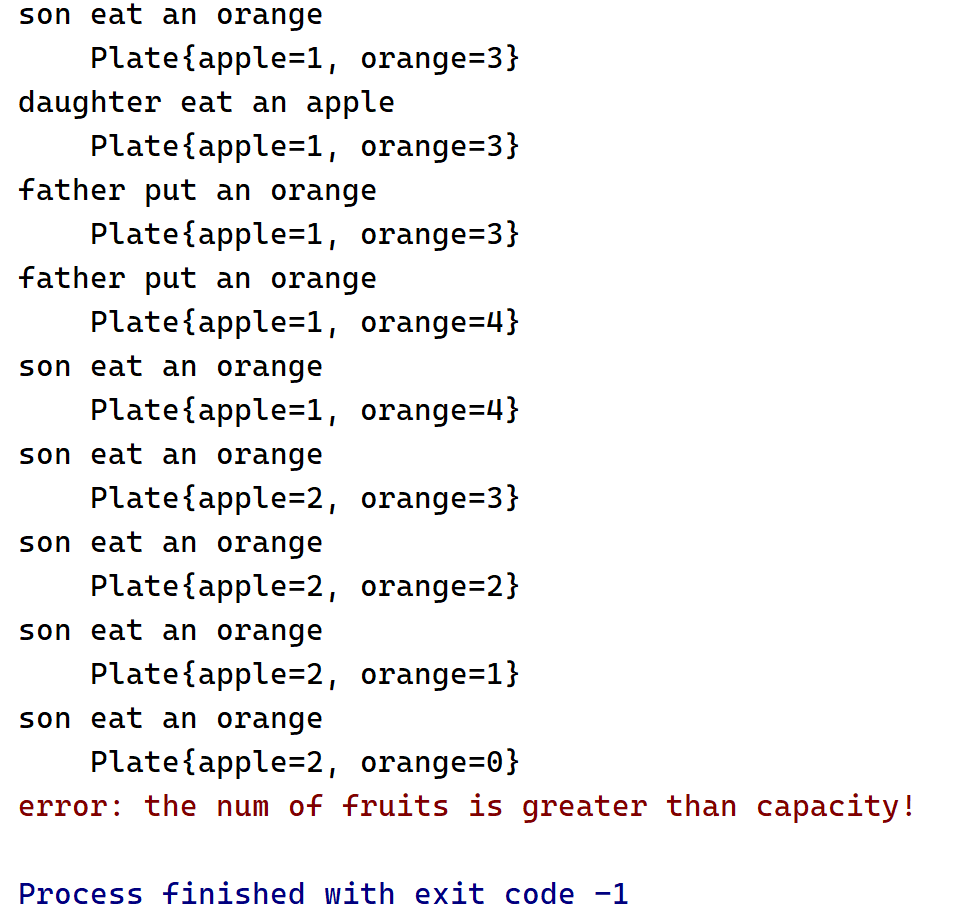
其实这样做不是十分严谨的,因为万一我们执行了几分钟,程序还未出错,我们并不能百分比确定这样的程序是正确的,但是十分幸运,我们很快就得到了验证:
可以看到我们的水果竟然超过了盘子的容量!
接下来,我们在理论部分验证一下程序的正确性,由之前的输出错误分析部分我们可以知道,去掉盘子的mutex互斥量后,父亲在放置水果和孩子在拿水果的过程是可以同时执行的,也就是说他们同时可以改变orange或者apple的数量,如果种类不同还可以接受,但是一旦对相同类别的水果进行加减操作,则必然会造成并发安全问题!这也就是我们常说的临界区代码:
1
2
3
4
5
6
7
8
public void putOrange () { orange++; checkCapacity(); public void getOrange () { orange--; checkCapacity(); }
源代码 main.java
1
2
3
4
5
6
7
8
9
10
11
12
13
14
15
16
17
18
19
20
21
22
23
24
25
26
27
28
29
30
31
32
33
34
35
36
37
38
39
40
41
42
43
44
45
46
47
48
49
50
51
52
53
54
55
56
57
58
59
60
61
62
63
64
65
66
67
68
69
70
import java.util.Random;import java.util.concurrent.Semaphore;public class Main { public static void main (String[] args) { Random random = new Random (); Semaphore mutex = new Semaphore (1 ); Semaphore empty = new Semaphore (5 ); Semaphore orange = new Semaphore (0 ); Semaphore apple = new Semaphore (0 ); Plate plate = new Plate (5 ); People father = new People (() -> { try { empty.acquire(); mutex.acquire(); if (random.nextBoolean()) { plate.putApple(); System.out.println("father put an apple" ); System.out.println("\t" + plate); apple.release(); } else { plate.putOrange(); System.out.println("father put an orange" ); System.out.println("\t" + plate); orange.release(); } mutex.release(); } catch (InterruptedException e) { e.printStackTrace(); } }, -1 ); People son = new People (() -> { try { orange.acquire(); mutex.acquire(); plate.getOrange(); System.out.println("son eat an orange" ); System.out.println("\t" + plate); mutex.release(); empty.release(); }catch (InterruptedException e) { e.printStackTrace(); } }, -1 ); People daughter = new People (() -> { try { apple.acquire(); mutex.acquire(); plate.getApple(); System.out.println("daughter eat an apple" ); System.out.println("\t" + plate); mutex.release(); empty.release(); } catch (InterruptedException e) { e.printStackTrace(); } }, -1 ); son.start(); daughter.start(); father.start(); } }
People.java
1
2
3
4
5
6
7
8
9
10
11
12
13
14
15
16
17
18
19
public class People { private Runnable thing; private int times; public People (Runnable thing, int times) { this .thing = thing; this .times = times; } public void start () { new Thread (() -> { int times = this .times; while (times == -1 || times-- > 0 ) { thing.run(); } }).start(); } }
Plate.java
1
2
3
4
5
6
7
8
9
10
11
12
13
14
15
16
17
18
19
20
21
22
23
24
25
26
27
28
29
30
31
32
33
34
35
36
37
38
39
40
41
42
43
44
45
46
47
48
public class Plate { public final int capacity; public int apple; public int orange; public Plate (int capacity) { this .capacity = capacity; } private void checkCapacity () { if (apple + orange > capacity) { System.err.println("error: the num of fruits is greater than capacity!" ); System.exit(-1 ); } else if (apple < 0 || orange < 0 ) { System.err.println("error: the num of fruits should not be minus!" ); System.exit(-2 ); } } public void putApple () { apple++; checkCapacity(); } public void putOrange () { orange++; checkCapacity(); } public void getOrange () { orange--; checkCapacity(); } public void getApple () { apple--; checkCapacity(); } @Override public String toString () { return "Plate{" + "apple=" + apple + ", orange=" + orange + '}' ; } }